Three-Dimensional Science
Three-dimensional science instruction moves classrooms away from memorizing disconnected facts and toward genuine understanding. Students figure things out rather than being told.
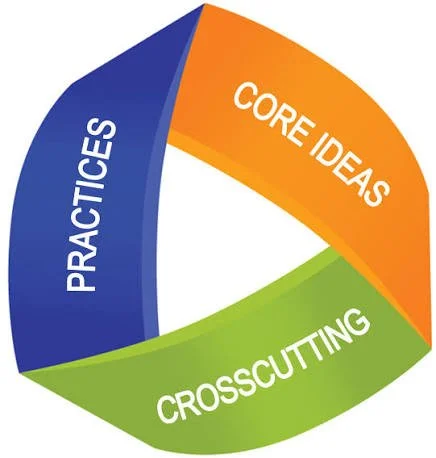
The shift comes from A Framework for K-12 Science Education: Practices, Crosscutting Concepts, and Core Ideas (NRC, 2012), and it is built into the Utah SEEd standards you will write to. A standard is not a topic to cover. It is a three-dimensional performance; students do something, think in a particular way, and come to know something they can apply to a real phenomenon.
What students do: Science & Engineering Practices
How students think: Crosscutting Concepts
What students know and apply: Disciplinary Core Ideas
Why We Plan This Way
Weaving three dimensions together lets students make sense of real-world contexts the way scientists actually do in the field.
In practice, the three dimensions are carried by inquiry instruction with three moves. Students GATHER evidence by observing, testing, and questioning a puzzling phenomenon. They REASON through what that evidence means, building and revising explanations as their thinking develops. They COMMUNICATE their ideas by sharing models, arguments, and conclusions with peers.
That Gather → Reason→Communicate cycle is the spine of the instructional procedures you will write. It is also the lesson plan template asks you to describe instruction through what students are doing and how they are thinking, not through what they will say.
If your instructional procedures can be read as a list of things the teacher will present, the lesson is not yet three dimensional. Rewrite each step so the subject of the sentence is students.
Dimension 1 - Science and Engineering Practices
What students do. These are the eight practices scientists and engineers use, written as student work rather than teacher activities. Choose the practices your lesson genuinely requires - usually two to four - and make sure one of them is the practice you named in your standard.
Dimension 2 - Crosscutting Concepts
How students think. These seven lenses show up across every science discipline, which is what makes them worth naming out loud. They give students a way to transfer thinking from a rock layer to a hillside to a heartbeat.
Dimension 3 - Disciplinary Core Ideas
What students come to know and apply. The DCI is the content, but in a three-dimensional lesson it is the destination rather than the starting point - students build toward it through the practices and concepts.
On the lesson plan template, write the DCI with its number (code) plus the big idea in full sentences. The number or code alone tells your reader nothing about what students will understand.